
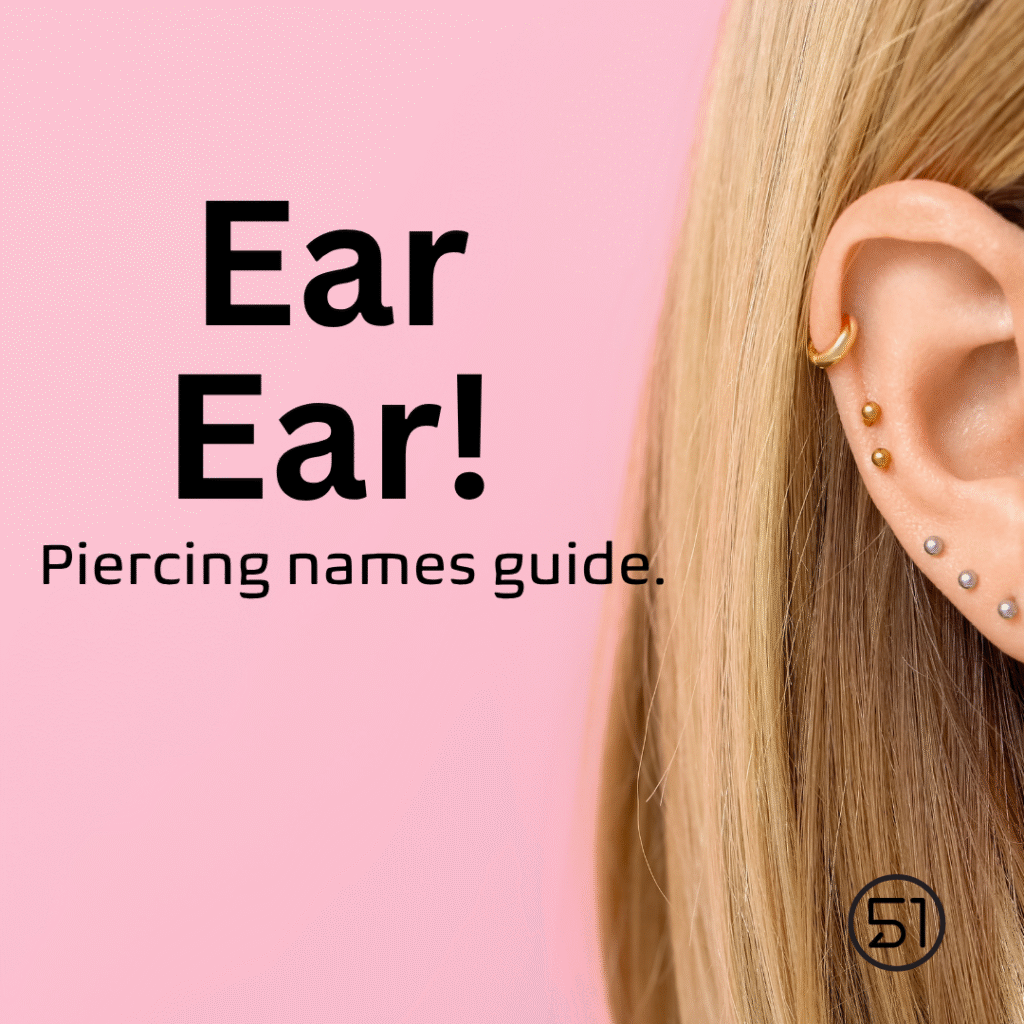
Ear piercing styling has is a form of self-expression.
With dozens of different placements that can be combined to create a unique look. Understanding the different types of ear piercing, where they’re located, and how they heal can help you make an informed decision. Whether you’re planning your first piercing or building a curated ear, knowledge is power.
Before booking an appointment, it’s also worth reading our complete Piercing Care Guide to understand the healing process and aftercare requirements.
What Are the Different Types of Ear Piercings?
Ear piercings generally fall into two categories: Lobe and cartilage piercings.
Lobe piercings tend to heal more quickly, while cartilage piercings often require more patience and aftercare.
What Is a Lobe Piercing?
The lobe piercing is the most common ear piercing and often the first piercing people receive.
Located in the fleshy lower section of the ear, lobe piercings are versatile and can accommodate a wide range of jewellery styles including studs, hoops and decorative pieces.
Many people choose double, triple or even stacked lobe piercings to create a more personalised look.
Why Choose a Lobe Piercing?
- Can be done from age 10
- Quick healing time
- Less discomfort than cartilage piercings
- Suitable for most anatomy
- Easy to style and stack
What Is a Helix Piercing?
A helix piercing is placed on the outer rim of the upper ear cartilage. One of the most popular cartilage piercings, the helix offers plenty of flexibility for styling with studs, hoops and decorative jewellery.
The forward helix sits at the front of the ear where it joins the side of the head.
Variations Include:
- Single Helix
- Double Helix
- Triple Helix
- Forward Helix
What Is a Flat Piercing?
The flat piercing is in the broad, flat section of cartilage between the helix and the inner ear.
This area provides a larger surface for decorative jewellery and is becoming increasingly popular in curated ear designs.
What Is a Tragus Piercing?
The tragus is the small piece of cartilage that partially covers the entrance to the ear canal.
Although small, it makes a big visual impact.
Many clients choose a tragus piercing because it is subtle, unique and works well with other ear piercings.
What Is an Anti-Tragus Piercing?
Located directly opposite the tragus, just above the earlobe, the anti-tragus is a less common cartilage piercing.
Not everyone has suitable anatomy for this piercing, so an assessment by a professional piercer is essential.
What Is a Conch Piercing?
Located directly opposite the tragus, just above the earlobe, the anti-tragus is a less common cartilage piercing.
Not everyone has suitable anatomy for this piercing, so an assessment by a professional piercer is essential.
There are two main options:
Inner Conch Central bowl of the ear
Outer Conch Closer to the outer edge
What Is a Daith Piercing?
The daith piercing passes through the innermost fold of cartilage above the ear canal.
Its hidden location creates a distinctive look and makes it a favourite for those wanting something different from traditional cartilage piercings.
Because of its placement, cleaning can be more challenging during healing.
What Is a Rook Piercing?
The rook piercing is located on the thick ridge of cartilage above the daith.
It creates a striking visual effect and is often paired with daith or conch piercings as part of a curated ear.
What Is a Snug Piercing?
The snug runs through the inner cartilage ridge of the ear.
This piercing is highly anatomy-dependent and not suitable for everyone.
Because it passes through thick cartilage, healing can take longer than many other ear piercings.
What Is an Industrial or Scaffold Piercing?
An industrial piercing, sometimes called a scaffold piercing, consists of two separate cartilage piercings connected by a single straight barbell.
Typically positioned across the upper ear, it creates one of the most dramatic ear piercing looks available.
Not every ear is suitable for an industrial piercing, so a professional anatomy assessment is important.
What Is an Orbital Piercing?
An orbital piercing uses a single ring to connect two separate piercing holes.
Orbital piercings can be created in several locations around the ear, making them highly customisable.
Which Ear Piercing Hurts the Most?
Pain is subjective and varies from person to person. If you’re curious about how ear piercings compare with other body piercings, read our guide to the Most Painful Piercings Ranked.
Ear piercings are low pain piercings. Which can be ranked within themselves as below:
How Long Do Ear Piercings Take to Heal?
Healing times vary depending on placement and anatomy. Many cartilage piercings can feel healed long before the internal tissue has fully recovered. Following professional aftercare advice is essential.
Lobe
6-8 weeks
Tragus
3-6 months
Conch
2-6 months
Daith
6-9 months
Helix
3-12 months
Industrial
6-12 months
For detailed healing advice, download our Piercing Care Guide.
How Do You Choose the Right Ear Piercing?
The best ear piercing depends on three factors:
Your Anatomy
Not every ear is suitable for every piercing. Features such as cartilage shape, ridge definition and ear size can affect what is possible.
Your Lifestyle
If you wear headphones daily, play contact sports or sleep on one side, some piercings may heal more comfortably than others.
Your Style Goals
Some people prefer a minimalist look with a few carefully placed piercings. Others enjoy creating a fully curated ear with multiple jewellery combinations.
A professional consultation can help determine the best options for your anatomy and lifestyle.
What Is an Ear Curation?
An ear curation is a planned collection of piercings designed to complement each other. The best curated ears are built gradually, allowing each piercing to heal properly before adding the next.
Popular combinations include:
Minimalist Ear
- Single Lobe
- Upper Lobe
- Helix
Balanced Ear
- Double Lobe
- Conch
- Helix
Statement Ear
- Double Lobe
- Daith
- Rook
- Industrial
FAQs - Ear Piercing
Which ear piercing heals the fastest?
Lobe piercings typically heal the fastest, usually within 6 to 8 weeks.
Which ear piercing takes the longest to heal?
Industrial and some helix piercings can take up to 12 months to heal fully.
Can I get multiple ear piercings at the same time?
Yes, although your piercer may recommend limiting the number to support proper healing.
Are all ear piercings suitable for everyone?
No. Many cartilage piercings are anatomy-dependent and require an assessment before piercing.
Should I get pierced with a gun or a needle?
Professional body piercers use sterile single-use needles. Needles create less trauma to tissue and are more suitable for cartilage piercings.
Ready to Plan Your Next Ear Piercing?
Understanding the locations and healing requirements of different ear piercings helps you make informed choices and avoid common mistakes.
Whether you’re considering a simple lobe piercing or a full ear curation, professional advice, suitable anatomy and proper aftercare are the keys to long-term success.
Book in now, with knowledge at your disposal.
Parents considering piercings for younger clients may also find these guides useful:
What Age Can You Get a Piercing?
My Child Wants Their Ears Pierced: What Should I Do?
Piercing Healing Times Explained
Piercing Gun vs Needle: Which Is Safer?