
Extreme piercings can be … extreme
Most piercings are fairly straightforward. A nostril piercing? Normal. A helix piercing? Common. Even nipple piercings barely raise an eyebrow these days. But every now and then, a piercing appears that makes even experienced piercers pause and say, “Well…” Look, we’re not here to yuck anybody’s yum, today we’ll be talking about extreme piercings.
If you have a weak stomach for extreme piercings, now is the time to stop reading.
3.
2.
1…
Okay, you’ve had your chance. From finger piercings worn by celebrity children to people suspended from hooks through their shoulders… the world of extreme body modification can be fascinating, controversial and occasionally enough to make your toes curl.
This guide explores some of the weirdest, most unusual, and most talked-about piercings from around the world. Some have deep cultural significance. Others are artistic performance pieces. A few simply leave us asking one question: “How did they think that was a good idea?”
Key Takeaway
Most of us think we’re being adventurous when we get a second lobe piercing. Meanwhile, somewhere in the world, somebody is being suspended from hooks through their shoulders, wearing a corset made entirely of piercings, or stretching a lip plate the size of a saucer.
The world of body modification is weird, wonderful and often completely baffling, but it all comes from the same human desire to express identity, creativity and individuality.
Whether you’re happy with a nostril stud or secretly fascinated by suspension hooks, one thing is clear: the phrase “you can pierce anything” should probably come with a few terms and conditions attached.
What Counts as an Extreme Piercing?
An extreme piercing is generally considered any piercing that goes beyond traditional jewellery placement. Some are performed by professional body modification artists. Others exist primarily as temporary artistic expressions.
This might include:
- Unusual body locations
- Large-scale stretching
- Temporary performance piercings
- Suspension piercings
- Experimental body modifications
- Cultural body modifications unfamiliar to Western audiences
What Happened with North West's Finger Piercings?
In 2024, photographs of North West, daughter of Kim Kardashian and Kanye West, appeared to show what looked like finger piercings.
The internet immediately did what the internet does best and collectively lost its mind.
Questions quickly followed:
- Can fingers actually be pierced?
- Is it safe?
- Is it legal?
- Why would anyone want them?
The reality is that finger piercings do exist, although they are notoriously difficult to heal.
Because fingers move constantly, experience frequent friction and come into contact with countless surfaces every day, finger piercings often suffer from migration, rejection and irritation.
As for regulations, things become murkier.
In the UK there is no single national law governing body piercing ages. Instead, local authority regulations, studio policies and parental consent requirements often determine what is permitted.
Many reputable studios would be extremely cautious about performing complex or unusual piercings on children due to healing challenges and ethical considerations.
But, in America where the piercing was done – there is a law whereby minors between 14 and 18 years of age require parental permission. As North was 12 at the time… it shows what money can buy.
The wider debate sparked an interesting question: Just because something can be pierced, does it mean it should be?
Can You Really Pierce Your Fingers?
Technically yes.
Practically… it’s complicated.
Finger piercings are usually performed as surface piercings or dermal anchors.
Unfortunately, fingers are one of the least forgiving places on the body for healing.
Why Finger Piercings Often Fail
Many experienced piercers simply won’t perform them because they are likely to fall out.
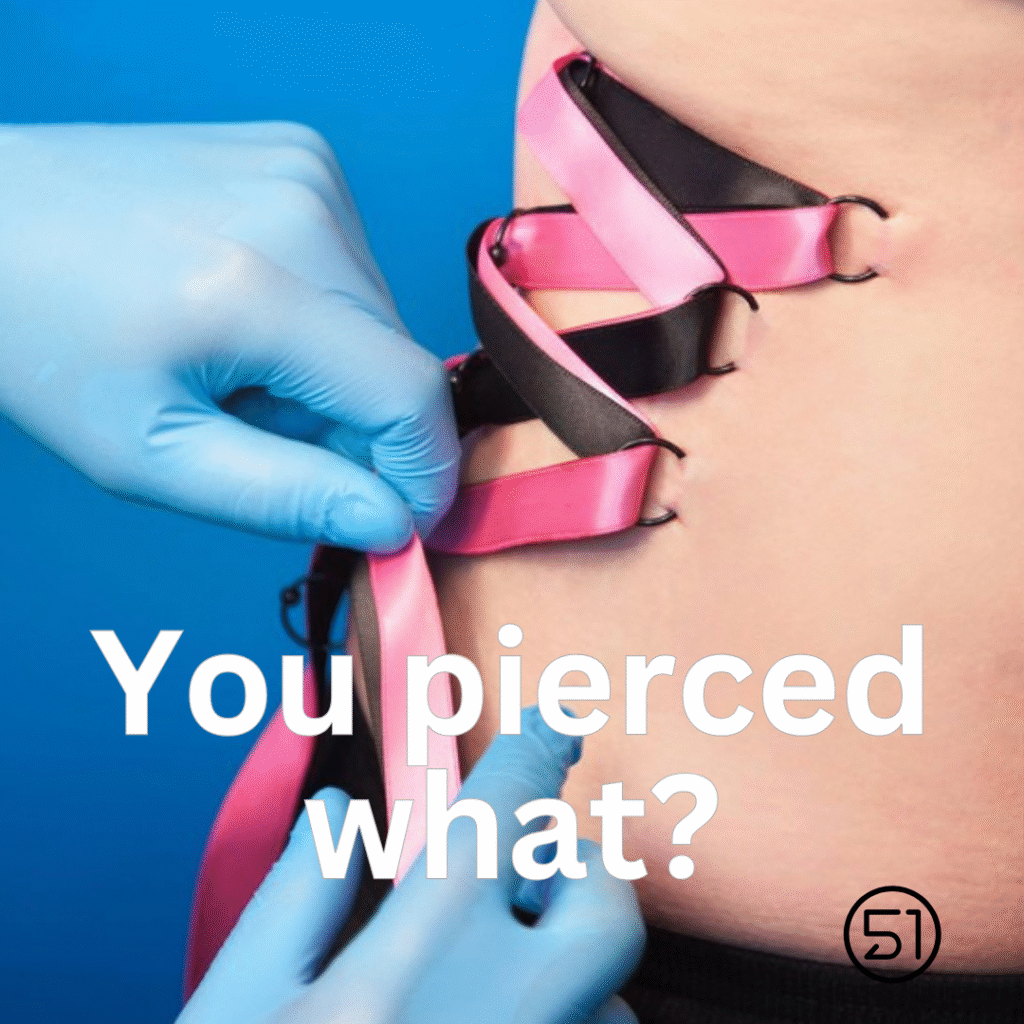
What Are Corset Piercings?
Corset piercings are perhaps one of the most visually dramatic body modifications ever created.
A series of symmetrical piercings are placed in rows, often down the back, before ribbon is threaded through them to resemble a Victorian corset.
The photographs can look incredible.
The reality is rather less glamorous.
Corset piercings are usually temporary.
Because of the number of piercings involved and the tension created by the ribbon, long-term healing is extremely difficult. Think of them more as body art than practical piercings.
They are often performed for:
- Photoshoots
- Artistic projects
- Body modification events
- Performance art
What Are Suspension Hooks?
This is the point where some readers may wish to put their tea down. Body suspension involves inserting large hooks through the skin and suspending a person from those hooks.
Yes. Actually hanging.
No. We are not making this up.
Suspension practices have existed in various cultures and body modification communities for decades.
For participants, suspension is often described as:
- Meditative
- Spiritual
- Empowering
- Transformational
For everyone else watching, it is usually described as:
- “Absolutely not.”
The procedure requires specialist knowledge, strict hygiene standards and extensive preparation.
This is not something that belongs in the category of everyday body piercing.
Why Do People Hang from Hooks?
It’s easy to dismiss suspension as simply shocking, but participants often describe it very differently. In many ways, suspension has more in common with endurance sports or ritual practices than traditional piercing.
Whether you understand it or not, it remains a significant part of modern body modification culture.
Many of those who do it report:
- Overcoming fear
- Personal achievement
- Emotional release
- Deep concentration
- Mind-body connection
What Are Lip Plates and Cultural Stretching?
Some of the world’s most striking body modifications have deep cultural roots.
Various indigenous groups throughout Africa and South America have practised lip stretching for centuries. Unlike modern fashion trends, these modifications often carry generations of cultural significance.
Large decorative lip plates can symbolise:
- Identity
- Beauty
- Social status
- Cultural heritage
- Community belonging
Viewing them simply as “weird piercings” dismisses the important traditions behind them.
What About Cheek Stretching?
Cheek stretching is less common but does exist within certain body modification communities. Unlike traditional cheek piercings, stretching gradually enlarges the piercing to accommodate larger jewellery. It is considered an advanced modification requiring significant experience and professional guidance.
This creates a dramatic appearance but comes with increased risks including:
- Scarring
- Tissue thinning
- Gum irritation
- Dental complications
Are Extreme Piercings Actually Safe?
Many extreme modifications carry significantly greater risks than standard piercings. The answer depends entirely on:
- Professional training
- Sterile procedures
- Appropriate jewellery
- Individual anatomy
- Aftercare
Potential complications can include:
- Migration
- Rejection
- Scarring
- Infection
- Permanent tissue changes
This is why reputable professionals place such importance on consultations and realistic expectations.
Should You Get an Extreme Piercing?
If you’ve reached this point and decided you absolutely must have suspension hooks inserted through your shoulders, we admire your commitment.
For everyone else, these modifications are perhaps best appreciated from a safe distance.
Most people find they can achieve a unique look through more traditional piercings such as:
- Navel piercings
- Facial piercings
- Ear curation projects
- Surface piercings
- Dermal anchors
All of which don’t need a crane nor a safety harness.
FAQs - About Extreme Piercings
Are corset piercings permanent?
Usually not most corset piercings are temporary body art projects or performance pieces.
Is body suspension legal in the UK?
When performed by consenting adults in appropriate environments, body suspension is generally legal. However, local regulations and health requirements vary.
What is the most painful body modification?
Pain is subjective, but body suspension is often considered one of the most physically and mentally intense forms of body modification.
Are lip plates considered piercings?
They begin as piercings but are gradually stretched over time into a larger modification.
Can children legally get extreme piercings?
This depends on local regulations, studio policies and the specific piercing involved. Reputable studios will always prioritise safety, healing suitability and informed consent.
For our age policy see our piercing age restrictions.
Ready for Something Slightly Less Extreme?
Extreme body modification may not be for everyone, but it highlights something fascinating about piercing culture. Across the world, people have always used body modification to express identity, belonging, creativity and individuality.
Whether that’s a simple nostril stud, a curated ear or a full corset piercing installation, the motivation is often surprisingly similar.
The difference is that one requires a saline spray. The other requires industrial rigging equipment.
Call us, or come into Area 51 to find out what body modifications we do.
Book your piercing today and let’s create something worth showing off.
Facial piercing – learn more about ones that are less extreme.
Under 16s cannot get facial piercings without consent from a parent or guardian.
What Age Can You Get a Piercing?
My Child Wants Their Ears Pierced: What Should I Do?
Piercing Healing Times Explained
Piercing Gun vs Needle: Which Is Safer?