
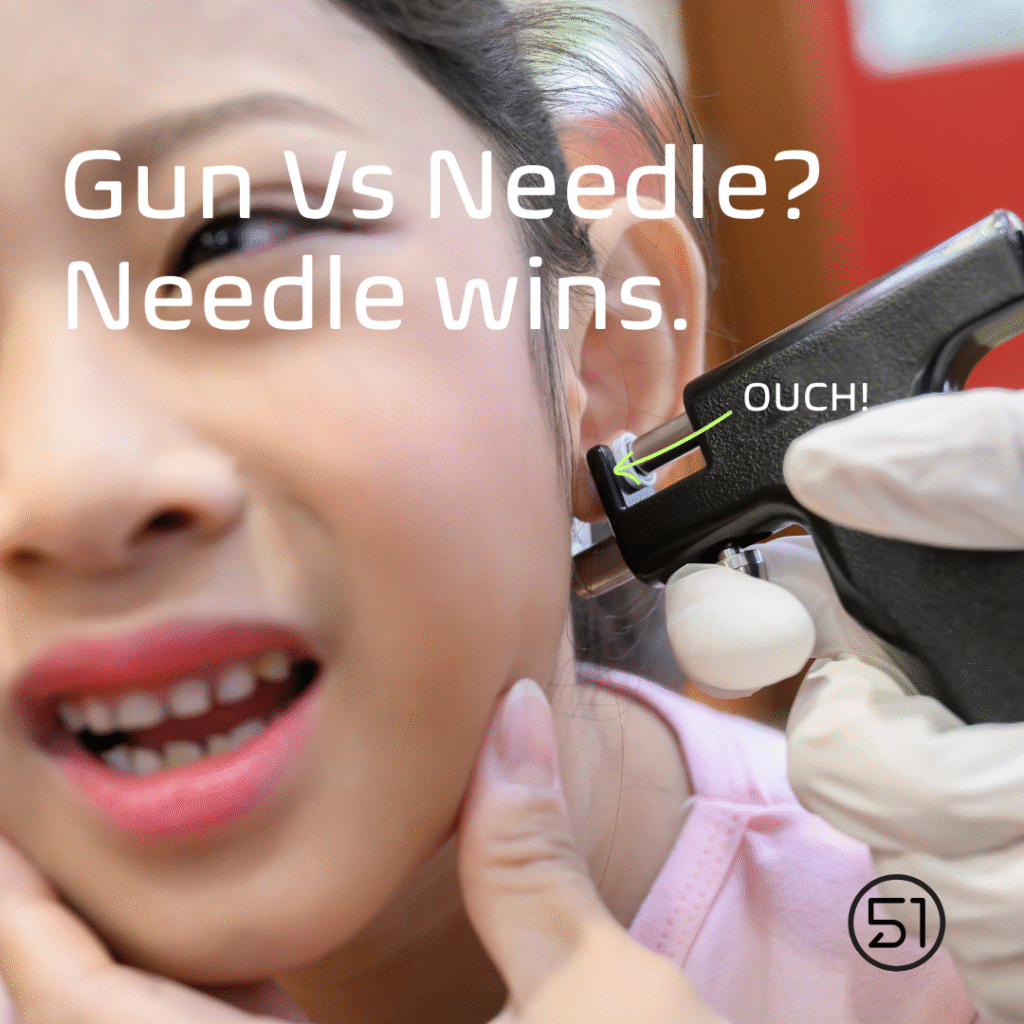
Piercing Gun vs Needle: Which Is Safer?
Piercing gun vs needle?
If you’re considering ear piercing for yourself or your child, one of the most common questions is whether a piercing gun or a professional needle is safer.
While piercing guns are often found in retail environments, professional piercing studios almost always use sterile single-use needles. The reason is simple: professional needle piercing is generally more precise, less traumatic to tissue, and easier to control from a hygiene perspective.
Understanding the difference can help you make a safer and more informed decision, particularly when booking a child’s first ear piercing.
Why Do Professional Piercers Use Needles?
Professional piercers use sterile single-use needles because they create a clean piercing channel rather than forcing jewellery through tissue using pressure.
This generally results in:
- Greater accuracy.
- Reduced tissue trauma.
- Better placement.
- Improved healing conditions.
- Lower irritation risk.
Professional needle piercing also allows the piercer to carefully assess anatomy and position jewellery correctly before the procedure takes place.
For this reason, professional studios throughout the UK overwhelmingly prefer needle piercing over guns.
The Dangers of Piercing Guns
Many people assume piercing guns are safer because they are widely available in retail settings.
Professional studios generally avoid piercing guns because they create blunt force trauma to tissue rather than producing a clean and controlled piercing channel.
Piercing guns can:
- Increase swelling.
- Damage surrounding tissue.
- Prolong healing.
- Increase irritation.
- Create less accurate placement.
This is particularly important when piercing cartilage, where tissue damage can significantly affect healing outcomes.
Another concern is sterilisation. Many piercing guns contain plastic components that cannot safely undergo full sterilisation procedures.
Professional needle piercing is generally cleaner, more precise, less traumatic to tissue and associated with better long-term healing outcomes.
Professional Piercing Hygiene Standards
Professional piercing hygiene involves significantly more than simply wearing gloves.
Safe piercing studios follow strict hygiene procedures designed to reduce contamination risks throughout the entire appointment process.
Professional piercing hygiene may include:
- Sterile single-use needles.
- Sterilised equipment.
- Disposable materials.
- Appropriate skin preparation.
- Professional cleaning procedures.
- Carefully controlled handling techniques.
At professional studios, jewellery and equipment are selected specifically for biocompatibility, healing safety and reducing irritation risks.
Professional environments are also designed to minimise contamination exposure during the piercing procedure itself.
Jewellery Quality Matters More Than People Expect
Low-quality jewellery is one of the most common causes of irritation in poorly healed piercings.
Cheap jewellery sold with home piercing kits or low-cost piercing systems may contain nickel, poor-quality coatings, rough surfaces or inappropriate sizing.
These can contribute to:
- Allergic reactions.
- Swelling.
- Irritation.
- Pressure complications.
- Delayed healing.
Professional studios use jewellery specifically designed for healing piercings, including implant-grade titanium and professional hypoallergenic materials.
Jewellery is carefully selected and sized to allow appropriate room for swelling while supporting safer healing.
Professional jewellery selection is based on healing performance, anatomy, safety and long-term comfort rather than appearance alone.
Anatomy and Placement Are Important
One of the most overlooked parts of piercing is anatomy assessment.
Not every piercing is suitable for every individual.
Professional piercers assess the following before any piercing takes place:
- Ear shape.
- Tissue structure.
- Healing suitability.
- Jewellery sizing.
- Placement practicality.
Poor placement can lead to:
- Uneven piercings.
- Healing complications.
- Pressure issues.
- Migration.
- Rejection.
- Long-term scarring.
This is particularly important for cartilage piercings, navel piercings and facial piercings.
Professional placement is designed to support both safe healing and long-term comfort.
Why Professional Needle Piercing Usually Heals Better
he piercing itself only takes a few seconds. Healing is where the real work begins.
Because professional needle piercing generally causes less trauma to tissue, many clients experience a smoother healing process than they would with a piercing gun.
Factors that support healthy healing include:
- Accurate placement.
- Implant-grade jewellery.
- Reduced tissue damage.
- Professional aftercare guidance.
- Appropriate jewellery sizing.
Healing times vary depending on the piercing type and individual circumstances.
Is Needle Piercing More Painful?
This is one of the most common misconceptions.
Many clients assume a needle will be significantly more painful than a piercing gun.
In reality, most people describe professional needle piercing as a brief sharp sensation lasting only a few seconds.
Because needles create a clean piercing channel rather than forcing jewellery through tissue, many clients actually find the experience less dramatic than they expected.
The quality of healing afterwards is often a far more important consideration than the few seconds required to perform the piercing.
What Makes a Safe Piercing Studio?
A safe piercing studio should prioritise:
- Hygiene.
- Safe placement.
- Anatomy assessment.
- Appropriate jewellery.
- Realistic aftercare.
- Professional standards.
Parents should feel comfortable asking questions, discussing healing expectations, checking age policies and understanding hygiene procedures before booking.
Professional studios should also be willing to refuse unsuitable piercings where necessary.
Sometimes the safest professional advice is to wait rather than rushing into a piercing too early.
Safe piercing is not simply about the procedure itself. It is about creating the best possible conditions for long-term healing and reducing unnecessary risks wherever possible.
Frequently Asked Questions
Are piercing guns safe?
Piercing guns are commonly used in some retail environments, but professional piercing studios generally prefer sterile single-use needles because they are more precise and create less tissue trauma.
Why do professional piercing studios use needles?
Professional piercers use needles because they allow greater accuracy, improved hygiene control, reduced tissue damage and better healing conditions.
Is needle piercing more painful than a piercing gun?
Most clients describe professional needle piercing as a brief sharp sensation lasting only a few seconds. Many find it less uncomfortable than expected.
Which heals faster: piercing gun or needle?
Healing varies between individuals, but professional needle piercing generally creates conditions that support smoother healing due to reduced tissue trauma and more accurate placement.
Can cartilage be pierced with a gun?
Professional piercers generally advise against using piercing guns for cartilage because of the increased risk of tissue damage and healing complications.
Why Families Choose Area 51 Basingstoke
Area 51 has been professionally piercing clients in Basingstoke since 1998.
We use sterile single-use needles, implant-grade jewellery and professional hygiene procedures designed to support safe healing and long-term comfort.
Our team regularly works with younger clients and is always happy to answer questions about piercing methods, healing expectations and suitability before any appointment takes place.
Speak to Our Team
If you have questions about:
- Piercing guns.
- Professional needle piercing.
- Healing times.
- Jewellery options.
- Age suitability.
- Safe piercing practices
Our team is always happy to help.
Thinking about booking a piercing appointment? Contact Area 51 Basingstoke for professional advice and guidance.